
Artist Manifesto
Overtaking Distraction and eclipsing the Noise of Surroundings
I. The Core Philosophy: Sanctuario
The objective of the lens is to assert and hold the Sanctuario—those rare thresholds where scale overtakes distraction and the subject eclipses the noise of its surroundings. Whether the subject is the New Mexico horizon or the architecture of the human body, the work is a deliberate act of creating refuge through clarity. Sanctuario is not an escape from magnitude, but a confrontation with it: a space where presence, consequence, and stillness are allowed to exist without explanation.
II. Selective Tenebrism
Selective Tenebrism is used to sculpt with light and discipline with shadow. By isolating the subject against against shadow and dark as void, light is permitted to act as an arbiter rather than an ornament—revealing only what is necessary, withholding what must remain unresolved. Shadows are not the absence of illumination; they are a physical medium that dresses, protects, and restrains the form. Darkness is not mood, but boundary.
III. Monumentalism of the Intimate
Scale defines the gaze. The distant is rendered intimate, and the intimate is treated as monumental. Mountain ridgelines, sweeping horizons, and city outlines are traced, accentuated, and framed to make the ordinary extraordinary. The human body is approached as a living geography—its musculature and skeleton become the ridgelines and horizons, skin a landscape, a posture a valley, a breath a fault line. This is not abstraction for its own sake, but a refusal to diminish what is small by proximity alone.
IV. Kinetic Stillness
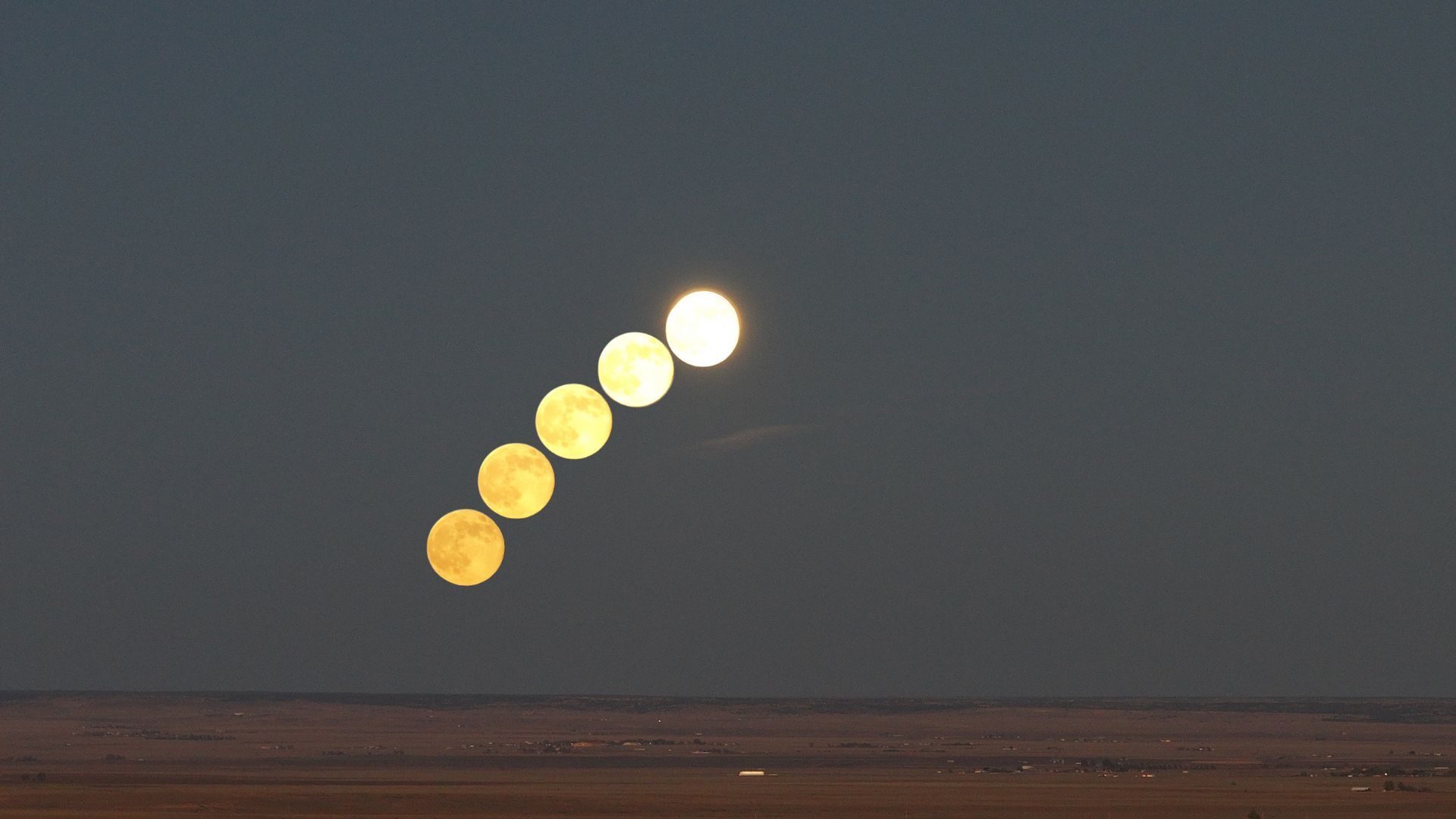
The work doesn't create static portraiture - it challenges a dynamic interaction of holding the moment. Every image must contain Kinetic Stillness—the felt tension of motion held in restraint, whether in the orbit of a moon or the poised suspension of a human figure. The images exist in the friction between movement and pause, endurance and release, presence and departure. What matters is not the action itself, but what the subject is facing.
V. The Authorial Gaze: Realism & Impressionism
Truth requires understanding of multiple perspectives. Discovery of that truth is found in knowing not just how to look, but why. The work moves deliberately between two modes:
Realism grounds the image in physical truth—precision, texture, and technical clarity establishing credibility and weight.
Impressionism preserves interior truth—allowing memory, atmosphere, and emotional residue to guide the image beyond literal detail.
What truth lies in each mode is enhanced by a third truth: the dimensions felt by audience through the art.
VI. Anonymity and Discovery
Identity is not erased, but withheld. By prioritizing geometry, light, and posture over explicit identification, the work resists possession and consumption. Subjects are not reduced to symbols, nor exposed for recognition; they are allowed to remain partially unknowable. Every session is an act of investigation, and every image a map of what can be seen without claiming ownership of what cannot.
NM Skies Collection


Justina